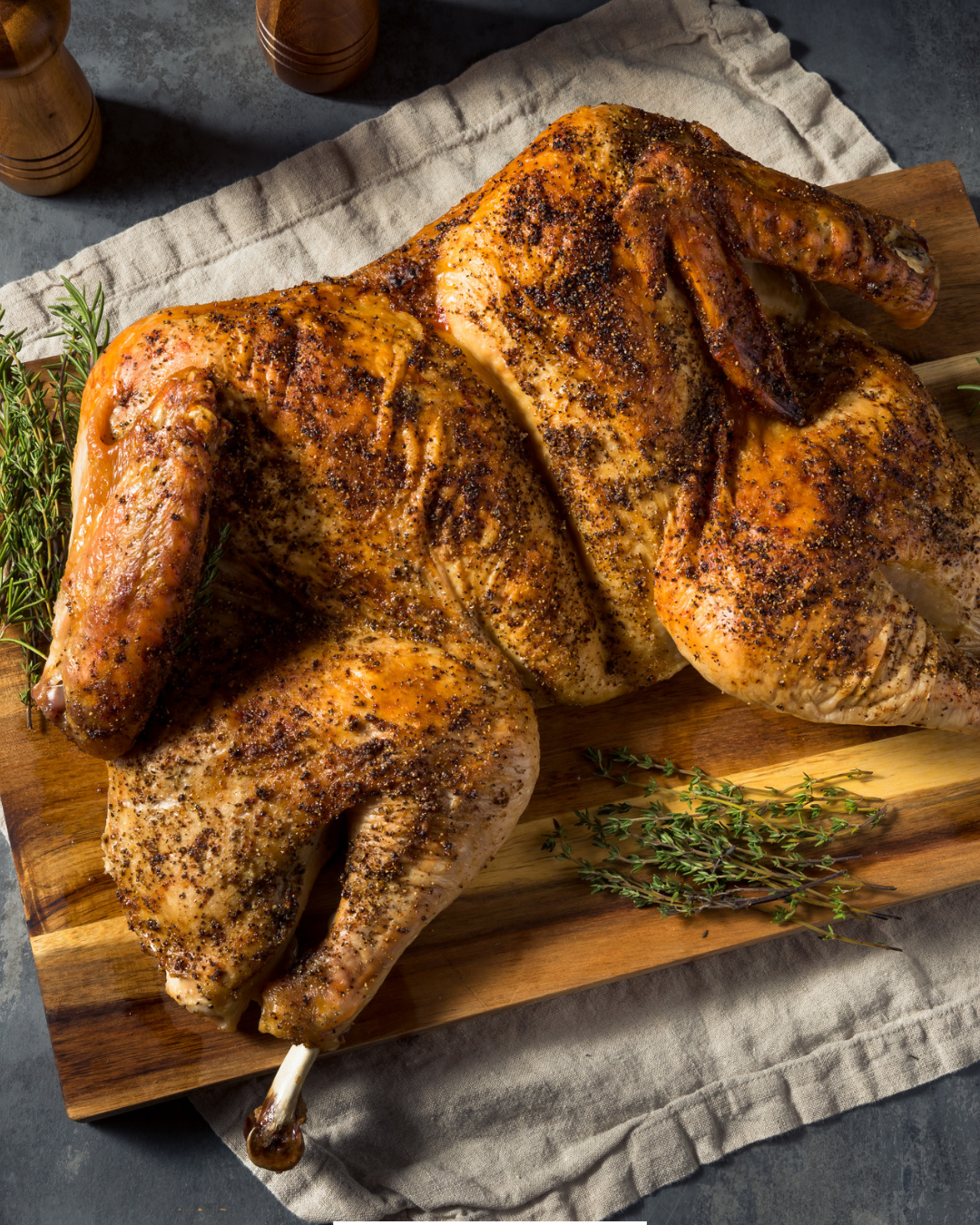
This Serious Eats Spatchcock Turkey recipe isn’t just a cooking technique—it’s an experience. Serious Eats, the culinary masterminds who combine food science with practical advice, have truly cracked the code to flawless turkey preparation. By spatchcocking—or butterflying—the bird, this method breaks away from the time-consuming traditional roast and delivers a succulent, evenly cooked turkey in a fraction of the time. When I tried it for the first time, I was amazed at how stress-free my kitchen felt, and my family? Let’s say they haven’t stopped requesting it.
Table of Contents
How to make Serious Eats Spatchcock Turkey
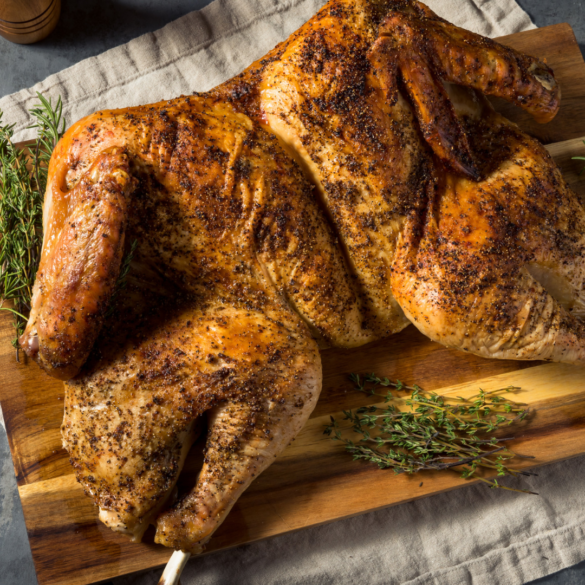
Serious Eats Spatchcock Turkey is a turkey recipe and cooking method popularized by Serious Eats, in which a whole turkey is butterflied by removing its backbone and flattening it before roasting.
Ingredients
For the Turkey
- 1 whole turkey, 12–14 pounds (natural or minimally processed is ideal)
- Kosher salt (Diamond Crystal preferred): about 1 tablespoon per 4 pounds of turkey
- For a 12-pound turkey, that’s roughly 3 tablespoons
- Freshly ground black pepper, to taste
- 2–4 tablespoons neutral oil or melted butter (for brushing on the skin)
Optional Flavorings for Dry Brine
These are optional, but add great flavor:
- 2–3 teaspoons baking powder (helps crisp the skin; mix with the salt)
- 2–3 teaspoons garlic powder or granulated garlic
- 2–3 teaspoons onion powder
- 1–2 tablespoons chopped fresh herbs (thyme, rosemary, sage) or 2–3 teaspoons dried herbs
For Roasting (Aromatics)
Optional but recommended for flavor and gravy:
- 1–2 onions, sliced or quartered
- 2–3 carrots, roughly chopped
- 2–3 celery stalks, roughly chopped
- A few sprigs of fresh herbs (thyme, rosemary, sage)
- 1–2 cups low-sodium chicken or turkey stock (for the pan and later gravy)
Instructions
1. Choose and Prep Your Turkey
- Thaw the turkey completely in the refrigerator if it’s frozen (this can take 3–4 days for a 12–14 lb bird).
- Remove the turkey from its packaging, take out the neck and giblets from the cavity.
- Pat the turkey very dry with paper towels. Dry skin is crucial for crispness.
2. Spatchcock (Butterfly) the Turkey
- You’ll flatten the turkey by removing the backbone so it cooks faster and more evenly.
- Place the turkey breast-side down on a large cutting board.
- Using sturdy kitchen shears:
- Cut along one side of the backbone from tail to neck.
- Repeat along the other side to completely remove the backbone.
- (Optional but recommended) Save the backbone and giblets for making stock or gravy.
- Flip the turkey breast-side up.
- Press firmly on the breastbone with the heels of your hands to flatten the bird.
- You should hear/feel a crack; this helps the turkey lie flat and cook evenly.
- If you’ve never spatchcocked before, it will feel intense at first, but once you do it, it becomes straightforward.
3. Dry Brine the Turkey
Serious Eats strongly favors dry brining over wet brining. It’s simpler, cleaner, and yields great texture.
In a small bowl, mix together:
- Kosher salt
- Optional baking powder (for extra crispy skin)
- Optional garlic powder, onion powder, and herbs
- Place the flattened turkey on a rimmed baking sheet or wire rack set over a sheet pan.
- Sprinkle the salt mixture evenly and generously over all surfaces:
- Front (breast, thighs, legs)
- Back (underside)
- Under the skin where you can easily access it (like over the breasts)
Refrigerate the turkey uncovered for at least 24 hours, up to 72 hours:
- 24 hours is good
- 48–72 hours is excellent
- The uncovered time also helps the skin dry out, which promotes browning and crispness.
- If you are tight on time: even 12 hours of dry brining is better than none.
4. Bring to Room Temp & Preheat the Oven
- About 45–60 minutes before roasting, take the turkey out of the fridge to lose some chill (this helps it cook more evenly).
- Preheat your oven to 450°F (230°C).
- Serious Eats-style spatchcock turkey is roasted hot and fast.
5. Prepare the Roasting Pan
- Line a large, sturdy rimmed baking sheet or roasting pan with foil for easy cleanup (optional).
- Scatter onions, carrots, and celery across the bottom.
- Add a few herb sprigs if using.
- Place a wire rack over the vegetables if you have one; if not, you can set the turkey directly on the vegetables, which act as a makeshift rack.
- Pour about 1 cup stock into the pan to prevent drippings from burning and to jump-start your gravy.
6. Roast the Spatchcocked Turkey
- Brush or rub the turkey skin with neutral oil or melted butter.
- Season the skin with a bit more black pepper if desired.
- Place the turkey, breast-side up, on the rack/pan.
- Roast at 450°F (230°C): For a 12–14 lb spatchcocked turkey, estimate 75–90 minutes, but start checking earlier.
- Use a meat thermometer:
- Insert into the thickest part of the breast: target 155–160°F.
- Insert into the thigh: target 170–175°F.
- The temperature will continue to rise a bit as the turkey rests, bringing the breast to about 160–165°F.
- If parts brown too quickly (especially the wings or tips of the drumsticks), tent those areas loosely with foil.
7. Rest the Turkey
- Once the turkey reaches target temps, remove it from the oven.
- Transfer the bird to a cutting board or platter.
- Let it rest at least 20–30 minutes before carving:
- This allows juices to redistribute, resulting in moister meat.
8. Make Gravy from the Drippings (Optional but Recommended)
- Skim excess fat from the pan juices if there’s a lot.
- Strain the liquids into a saucepan (press the roasted veggies to extract flavor).
- Taste and adjust seasoning (salt, pepper).
If you want thicker gravy:
- Make a slurry of 1–2 tablespoons flour or cornstarch with cold water.
- Whisk into simmering pan juices until thickened.
What to serve with Serious Eats Spatchcock Turkey
Serving a Serious Eats Spatchcock Turkey with the right sides and drinks can elevate your meal into a memorable culinary experience.
1. Mashed Potatoes
- No turkey feast is complete without creamy mashed potatoes!
- Make rich, buttery mashed potatoes that are smooth and comforting. Yukon Gold potatoes are a great choice for their creamy texture, but a mix of Russets and Golds works too.
- Add roasted garlic, cream cheese, or sour cream to elevate the flavor.
2. Stuffing (or Dressing)
You can’t skip stuffing (or dressing, if it’s baked outside the bird).
- Classic Herb Stuffing: Use bread cubes, onions, celery, butter, chicken broth, and traditional seasonings like sage and thyme.
- Creative Twists: Add sausage, apples, nuts, dried cranberries, or mushrooms for depth.
- Bake your stuffing in a separate dish since spatchcocking doesn’t allow the turkey cavity to hold stuffing.
3. Roasted Vegetables
Choose earthy roasted veggies with caramelised edges to complement the turkey’s flavours.
- Choices: Brussel sprouts, carrots, butternut squash, sweet potatoes, and parsnips work beautifully with the Serious Eats Spatchcock Turkey.
- Toss veggies in olive oil, garlic, rosemary, or maple syrup before roasting.
- For extra texture, sprinkle with toasted nuts or seeds before serving.
Ingredients Substitutes
When making the Serious Eats Spatchcock Turkey, you might need to adjust certain ingredients because of dietary preferences, availability, or a desire to explore creative alternatives.
1. Kosher Salt
Kosher salt is the cornerstone of dry brining because its coarse texture distributes evenly across the turkey’s surface and draws out moisture while seasoning deeply.
Substitutes:
- Table Salt: If using table salt instead of kosher salt, reduce the quantity by about half because table salt is finer and denser.
- Sea Salt: Fine sea salt can also work, but adjust the amount using the same guidelines as table salt.
- Herbed Salt: Combine table salt or kosher salt with fresh or dried herbs to add layers of flavor during dry brining.
2. Neutral Oil or Butter (for Skin)
This ingredient helps crisp up the turkey skin while providing some golden sheen.
Substitutes:
- Olive Oil: Extra virgin olive oil adds flavor depth and a slightly fruity note. Choose a mild variety to avoid overpowering the turkey’s flavor.
- Duck Fat or Chicken Fat: Why not go next level? These rich fats will lend an incredible flavor to the turkey skin.
- Ghee (Clarified Butter): Ghee is another great alternative that handles high heat well without burning, while providing buttery richness.
- Coconut Oil: Use refined coconut oil to avoid any detectable coconut flavor. Works well for those wanting to avoid dairy or neutral oils.
3. Seasonings for Dry Brine
The Serious Eats Spatchcock Turkey recipe keeps seasoning simple with just salt and optional black pepper, allowing the natural flavor of the turkey to shine. However, you can jazz it up with some substitutes or additions without overpowering the meat.
Substitutes:
- Baking Powder Substitute: Baking powder is recommended to help the skin crisp better. If you don’t have baking powder, skip it entirely or swap it for an equal amount of cornstarch for similar skin results.
- Herbs: If you can’t find fresh herbs like rosemary, thyme, or sage, dried versions work just as well. Use ½ teaspoon dried herbs for every tablespoon of fresh herbs.
- Spices: If you don’t like black pepper or want to experiment, try other spices such as smoked paprika for depth, chili powder for heat, or ground mustard for sharpness.
- Garlic Alternatives: If you don’t have garlic powder, finely mince fresh garlic cloves and rub the paste under the turkey skin for a bold earthy flavor.
4. Aromatics for Roasting Pan
The Serious Eats recipe uses onions, celery, carrots, and a touch of herbs as aromatics in the roasting pan, which infuses the drippings and flavours the gravy.
Substitutes:
Vegetable Alternatives:
Instead of onions, carrots, and celery, try using:
- Leeks: Milder than onions but just as aromatic.
- Parsnips: A great alternative to carrots, with a sweeter flavor.
- Turnips or rutabaga: Sharp, earthy substitutes.
- Apples or pears: For a slightly sweet fruity twist.
Herbs Alternatives:
Swap fresh rosemary, sage, or thyme with basil, oregano, or even dill for a different flavor profile.
Bay leaves can add a subtle earthiness to the drippings if fresh herbs aren’t available.
Liquid Substitutions:
Instead of chicken or turkey stock, try:
- Vegetable stock for a lighter option.
- White wine for acidity and complexity.
- Apple cider for subtle sweetness.
Final Thoughts
With the Serious Eats Spatchcock Turkey as your showstopper, the rest of your menu becomes a canvas to complement and enhance its flavors.
More Turkey Recipes:
Ingredients
For the Turkey
- 1 whole turkey, 12–14 pounds (natural or minimally processed is ideal)
- Kosher salt (Diamond Crystal preferred)
- For a 12-pound turkey, that’s roughly 3 tablespoons
- Freshly ground black pepper, to taste
- 2–4 tablespoons neutral oil or melted butter
Optional Flavorings for Dry Brine
These are optional, but add great flavor:
- 2–3 teaspoons baking powder
- 2–3 teaspoons garlic powder or granulated garlic
- 2–3 teaspoons onion powder
- 1–2 tablespoons chopped fresh herbs (thyme, rosemary, sage)
For Roasting (Aromatics)
Optional but recommended for flavor and gravy:
- 1–2 onions, sliced or quartered
- 2–3 carrots, roughly chopped
- 2–3 celery stalks, roughly chopped
- A few sprigs of fresh herbs (thyme, rosemary, sage)
- 1–2 cups low-sodium chicken or turkey stock
Instructions
1. Choose and Prep Your Turkey
- Thaw the turkey completely in the refrigerator if it’s frozen (this can take 3–4 days for a 12–14 lb bird).
- Remove the turkey from its packaging, take out the neck and giblets from the cavity.
- Pat the turkey very dry with paper towels. Dry skin is crucial for crispness.
2. Spatchcock (Butterfly) the Turkey
- You’ll flatten the turkey by removing the backbone so it cooks faster and more evenly.
- Place the turkey breast-side down on a large cutting board.
- Using sturdy kitchen shears:
- Cut along one side of the backbone from tail to neck.
- Repeat along the other side to completely remove the backbone.
- (Optional but recommended) Save the backbone and giblets for making stock or gravy.
- Flip the turkey breast-side up.
- Press firmly on the breastbone with the heels of your hands to flatten the bird.
- You should hear/feel a crack; this helps the turkey lie flat and cook evenly.
- If you’ve never spatchcocked before, it will feel intense at first, but once you do it, it becomes straightforward.
3. Dry Brine the Turkey
Serious Eats strongly favors dry brining over wet brining. It’s simpler, cleaner, and yields great texture.
In a small bowl, mix together:
- Kosher salt
- Optional baking powder (for extra crispy skin)
- Optional garlic powder, onion powder, and herbs
- Place the flattened turkey on a rimmed baking sheet or wire rack set over a sheet pan.
- Sprinkle the salt mixture evenly and generously over all surfaces:
- Front (breast, thighs, legs)
- Back (underside)
- Under the skin where you can easily access it (like over the breasts)
Refrigerate the turkey uncovered for at least 24 hours, up to 72 hours:
- 24 hours is good
- 48–72 hours is excellent
- The uncovered time also helps the skin dry out, which promotes browning and crispness.
- If you are tight on time: even 12 hours of dry brining is better than none.
4. Bring to Room Temp & Preheat the Oven
- About 45–60 minutes before roasting, take the turkey out of the fridge to lose some chill (this helps it cook more evenly).
- Preheat your oven to 450°F (230°C).
- Serious Eats-style spatchcock turkey is roasted hot and fast.
5. Prepare the Roasting Pan
- Line a large, sturdy rimmed baking sheet or roasting pan with foil for easy cleanup (optional).
- Scatter onions, carrots, and celery across the bottom.
- Add a few herb sprigs if using.
- Place a wire rack over the vegetables if you have one; if not, you can set the turkey directly on the vegetables, which act as a makeshift rack.
- Pour about 1 cup stock into the pan to prevent drippings from burning and to jump-start your gravy.
6. Roast the Spatchcocked Turkey
- Brush or rub the turkey skin with neutral oil or melted butter.
- Season the skin with a bit more black pepper if desired.
- Place the turkey, breast-side up, on the rack/pan.
- Roast at 450°F (230°C): For a 12–14 lb spatchcocked turkey, estimate 75–90 minutes, but start checking earlier.
- Use a meat thermometer:
- Insert into the thickest part of the breast: target 155–160°F.
- Insert into the thigh: target 170–175°F.
- The temperature will continue to rise a bit as the turkey rests, bringing the breast to about 160–165°F.
- If parts brown too quickly (especially the wings or tips of the drumsticks), tent those areas loosely with foil.
7. Rest the Turkey
- Once the turkey reaches target temps, remove it from the oven.
- Transfer the bird to a cutting board or platter.
- Let it rest at least 20–30 minutes before carving:
- This allows juices to redistribute, resulting in moister meat.
8. Make Gravy from the Drippings (Optional but Recommended)
- Skim excess fat from the pan juices if there’s a lot.
- Strain the liquids into a saucepan (press the roasted veggies to extract flavor).
- Taste and adjust seasoning (salt, pepper).
If you want thicker gravy:
- Make a slurry of 1–2 tablespoons flour or cornstarch with cold water.
- Whisk into simmering pan juices until thickened.